
Amazon's 75-Character Product Title Limit Starts 27 July 2026
Amazon is reducing most product titles to 75 characters and introducing searchable Item Highlights. Brands need a controlled plan before 27 July 2026.
Listen to article
From 27 July 2026, Amazon product titles in all categories except media will need to be 75 characters or fewer, including spaces.
This is a significant change for brands that have spent years building longer titles around search terms, product features, sizes, materials and compatibility information. Amazon is introducing a separate Item Highlights field with up to 125 characters, but the change should not be treated as a simple exercise in cutting words from the end of a title.
The commercial task is more important: decide which information deserves the most visible position, preserve the terms that help the right customer find the product and move supporting detail into the new field without weakening clarity or conversion.
What Amazon Is Changing
Amazon's UK announcement confirms four main changes:
- Product titles in all non-media categories will be limited to 75 characters, including spaces.
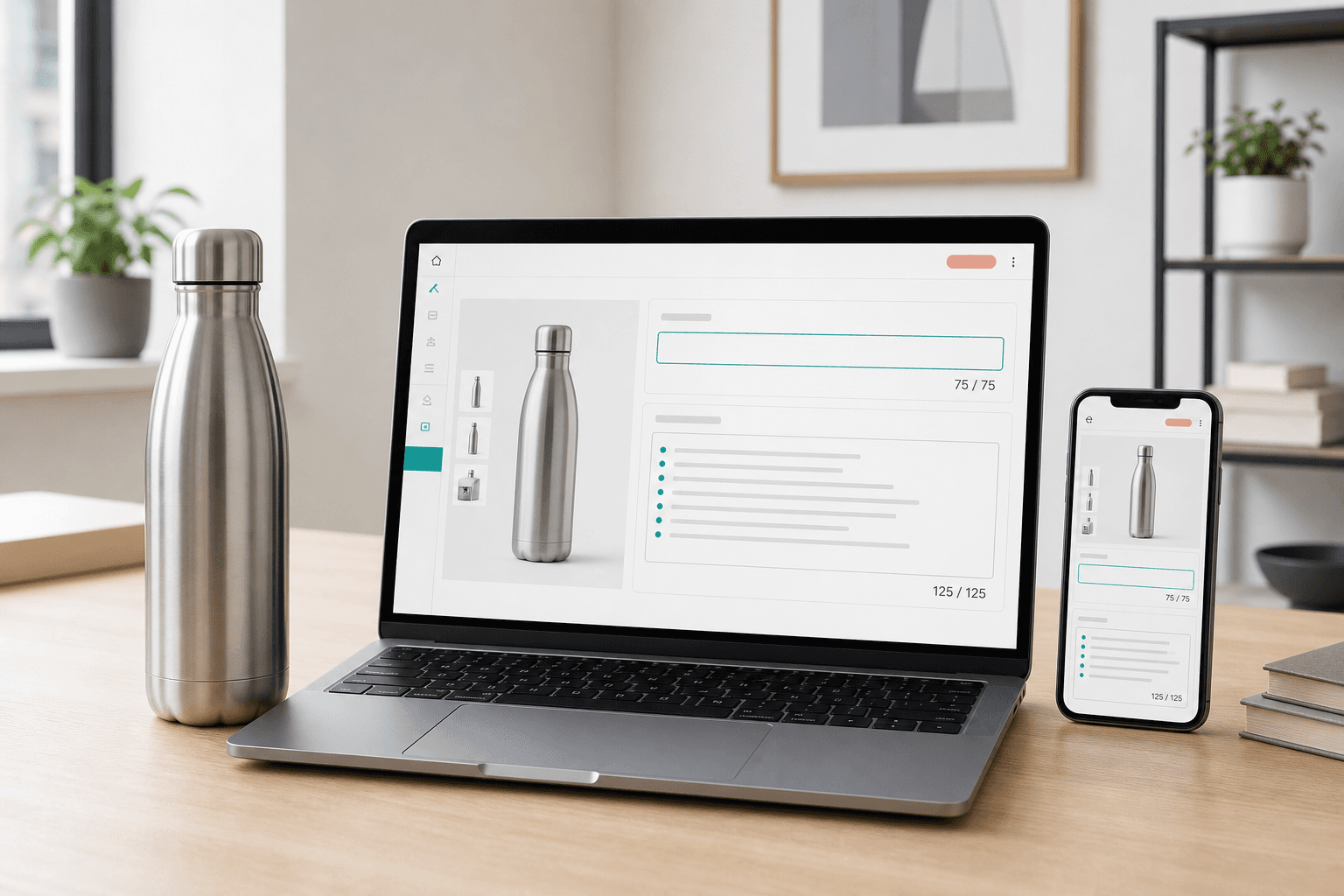
- Item Highlights will provide a further 125 characters for materials, recommended uses and other details that help customers compare products.
- Item Highlights will be searchable and visible below titles in search results and on product detail pages.
- Titles that remain over 75 characters after 27 July will be moved gradually to Amazon's AI-generated recommendation.
Amazon says listings will remain active while these changes are made. Brand owners will also have 14 days before implementation to review, modify and approve AI-generated title and Item Highlights recommendations in Review Listing Changes.
The official Seller Central route is Manage All Inventory, then Edit, followed by View enhancements on the left-hand side of the listing editor.
Why 75 Characters Changes The Listing Strategy
A long title can carry several pieces of information at once. It may include the brand, product type, model, primary benefit, material, size, colour, pack quantity, compatibility and one or more search terms.
At 75 characters, that approach will not fit.
Brands will have to be more disciplined about what belongs in the title. The strongest title will not be the one that squeezes in the most keywords. It will be the one that identifies the product clearly, retains the most commercially important information and reads naturally on a mobile screen.
A practical starting structure is:
**Brand + product type + key differentiator + essential variant**
The exact order will still depend on the category and Amazon's applicable title requirements. Size, count, compatibility or model information may be essential in one category and secondary in another.
Item Highlights can then carry useful supporting information such as material, recommended use, secondary benefits or additional compatibility detail.
Searchable Does Not Mean Identical Search Weight
Amazon says Item Highlights are searchable. That is useful, but brands should not assume that moving a term from the title into Item Highlights will preserve exactly the same organic ranking contribution.
Amazon has not stated that the two fields will carry identical weighting. Search visibility is also affected by relevance, sales history, conversion, availability, price, reviews and advertising activity.
For that reason, the highest-value search terms should not be moved casually. Brands should use search query data, advertising reports, Brand Analytics and current ranking evidence to decide which terms must remain in the 75-character title.
The goal is not to defend every legacy word. Many existing titles contain repetition or low-value detail. The goal is to protect the terms and product information that genuinely influence discoverability and customer choice.
Do Not Accept Every AI Recommendation Without Review
Amazon's AI tools may help brands work through large catalogues, but they should be treated as recommendations rather than final commercial decisions.
An automated title may be technically compliant while still losing a critical model reference, pack quantity, compatibility term or differentiator. It may also select wording that is accurate in isolation but inconsistent across a variation family.
Before approving a recommendation, check:
- Is the product type immediately clear?
- Is the brand name represented correctly where required?
- Does the title retain the strongest relevant search term?
- Are size, quantity, colour, model or compatibility details accurate?
- Does the title distinguish this child ASIN from the rest of the variation?
- Has useful secondary information moved into Item Highlights?
- Does the wording read naturally on both mobile and desktop?
AI can accelerate the first draft. It should not replace catalogue knowledge or commercial judgement.
Prioritise The Catalogue By Risk And Revenue
For a large catalogue, rewriting every title at once is unnecessary and risky. Start with the ASINs where an incorrect automated change would have the greatest commercial impact.
The first review group should normally include:
- High-revenue and high-traffic ASINs.
- Products with titles already over 75 characters.
- New launches and seasonal lines.
- Products with important compatibility or model information.
- Variation families where title consistency affects customer choice.
- ASINs with strong organic rankings for terms currently held in the title.
- Products receiving significant advertising investment.
This creates a controlled priority list. It also allows the team to learn from a smaller group before changing the full catalogue.
A Practical Plan Before 27 July
Start by exporting the active catalogue and counting every title character, including spaces. Separate the ASINs into compliant titles, titles just above the limit and titles requiring a full rewrite.
Record the current title and key performance baseline before making changes. Useful measures include sessions, conversion rate, ordered units, organic keyword position and advertising performance.
Rewrite high-value titles manually first. Use a consistent structure within each product family, but do not force every category into one generic template.
Review Amazon's suggestions through View enhancements. Compare each recommendation with your preferred version and make sure the Item Highlights field contains useful customer information rather than leftover wording.
Test the update on a small group of ASINs. Check the rendered result on mobile and desktop, confirm that variation details remain accurate and monitor performance after publication.
Keep a change log showing the previous title, new title, Item Highlights, approval date and owner. This will make it much easier to investigate any movement in discoverability or conversion.
Expect Some Unevenness During The Rollout
Amazon's announcement is clear, but sellers responding in the UK forum have reported that Item Highlights are not yet available consistently across every listing and that some bulk updates have returned an unsupported attribute error.
That does not change the 27 July deadline, but it does support a cautious implementation plan.
Test the field before committing to a large upload. Save processing reports, keep screenshots of errors and use Seller Support where the attribute is unavailable. Brands using feed providers or catalogue software should also confirm that their integration supports the new field correctly.
Vendor Central teams should check how the change is presented in their own account and confirm the appropriate update route before applying Seller Central instructions.
What Good Looks Like After The Change
A good 75-character title should let the customer understand the product quickly without feeling that information has been removed carelessly.
The Item Highlights field should add useful context, not repeat the title. Together, the two fields should communicate the product name, its most important differentiator and the supporting details needed to compare it with alternatives.
The final test is commercial:
- Can the right customer still find the product?
- Can they identify the correct variant?
- Is the product easier to understand on mobile?
- Has the change protected or improved conversion?
- Are catalogue teams able to govern future title changes consistently?
The brands that handle this well will not simply meet a new character limit. They will use the change to remove weak wording, improve mobile clarity and build a more controlled title structure across the catalogue.
Amazon's 27 July update is a content change, an SEO change and a catalogue governance change at the same time. It deserves a measured response before automated recommendations begin to shape live listings.
For tailored support with Amazon title audits, listing optimisation and catalogue governance, book a consultation.